
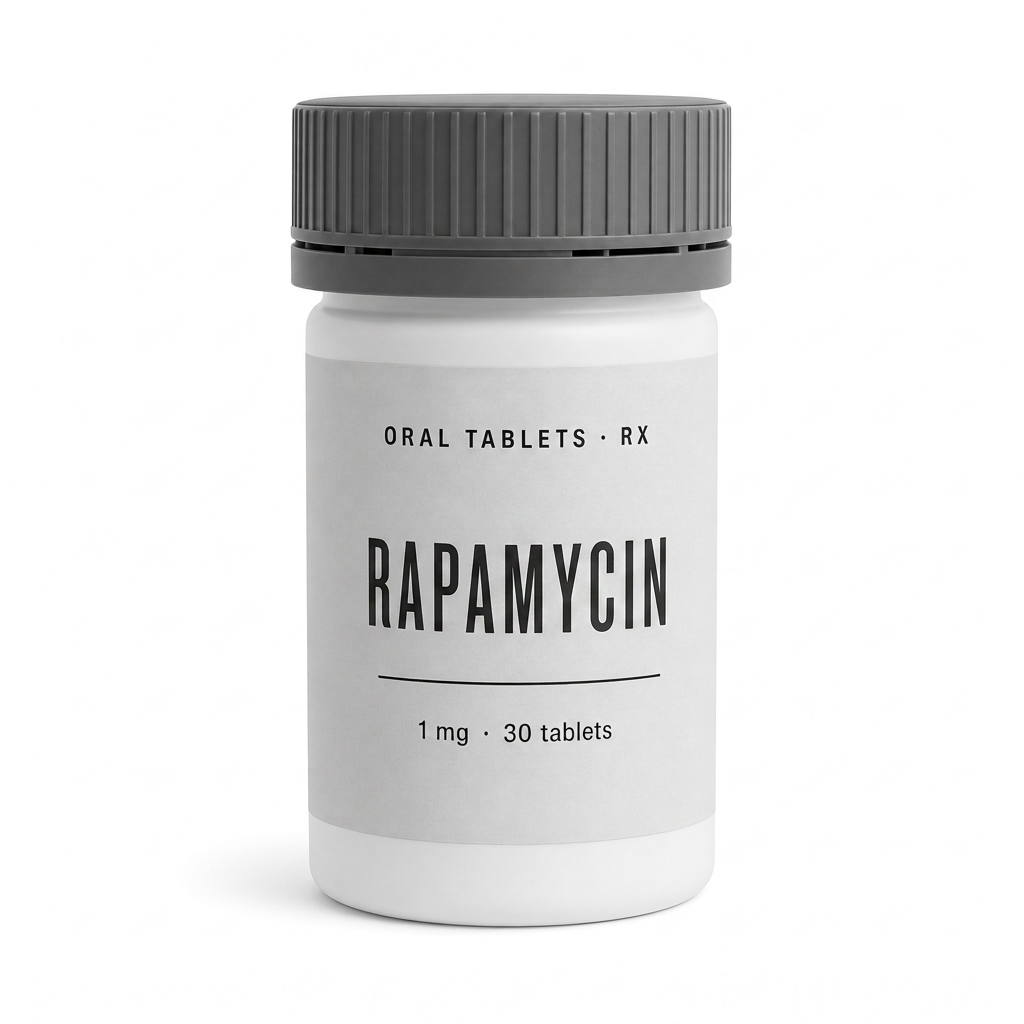
Sirolimus: Rapamycin
Longevity at the Cellular Level.
Oral · weekly
What is Rapamycin (Sirolimus)?
Rapamycin, also known as Sirolimus, is a naturally derived compound originally discovered in soil bacteria from Easter Island. It is FDA-approved and has been used clinically for decades as an immunosuppressant—but at low doses it has emerged as one of the most promising longevity compounds in modern medicine. By inhibiting the mTOR (mechanistic Target of Rapamycin) pathway, low-dose Rapamycin mimics some of the effects of caloric restriction and fasting—promoting autophagy, reducing inflammation, and extending healthspan in numerous model organisms.
The essentials
Your protocol, step by step
mTOR INHIBITION
Rapamycin (Sirolimus) inhibits the mTORC1 pathway—a central regulator of cell growth, protein synthesis, and autophagy. By dialing down mTORC1 activity, it promotes cellular housekeeping and slows the hallmarks of aging.
AUTOPHAGY ACTIVATION
mTOR suppression triggers autophagy, the body's process of clearing damaged proteins and organelles. Increased autophagy is strongly linked to longevity, improved metabolic health, and reduced disease risk.
IMMUNE & METABOLIC MODULATION
At low doses, Rapamycin can improve immune function, reduce chronic low-grade inflammation, and support healthier metabolic signaling—key targets in longevity medicine.
What patients look for
Questions, answered
More in Longevity & Vitality
METFORMIN
Clinician-prescribed metabolic support
B12
Endurance and focus, naturally.
NAD+ Injectable
Enhance energy levels, mental clarity & mood by supporting DNA health
Prescription products require a medical evaluation by a licensed provider. Treatment is only prescribed when clinically appropriate. Compounded medications are not FDA-approved products. Prices are as listed and may vary by dose, supply length and pharmacy.